suspended state: neither ebb nor flow
Suspended State: neither ebb nor flow is a series of works investigating the shifting relationship between the body and the river as interconnected sensing systems.
These works expand from the ongoing observational series Superficial Readings.
By observing surface phenomena, currents, reflections, interference, tidal movements, and environmental atmospheres of the river, a parallel is drawn to the body. The works speak to a specific time between a diagnosis of breast cancer and the successful completion of treatment.
The Tweed River had long been a place of reflection and meditation, but during this time it was experienced as a sentient presence: a place of respite, renewal and quiet companionship.
The river’s changing conditions seemed to register alongside the body, becoming less a backdrop than an active participant in observation. While each work arises from a personal encounter, together they speak to universal experiences of uncertainty and acceptance, control and surrender, observation and care, memory and experience, resilience and recovery.
As a series of works, they approach the river as a living record and as a datum – a reference point. Drawing on the visual language of scientific sampling, environmental monitoring, and medical imaging, the works examine moments that resist measurement - the waiting, the unknown and changing conditions.
River water is the primary material, presented in both liquid and frozen states. Resembling microscopic imagery, the works form imagined datasets composed not of empirical evidence but of observations, rhythms, sensations, creating a record of a time and committing it to memory.
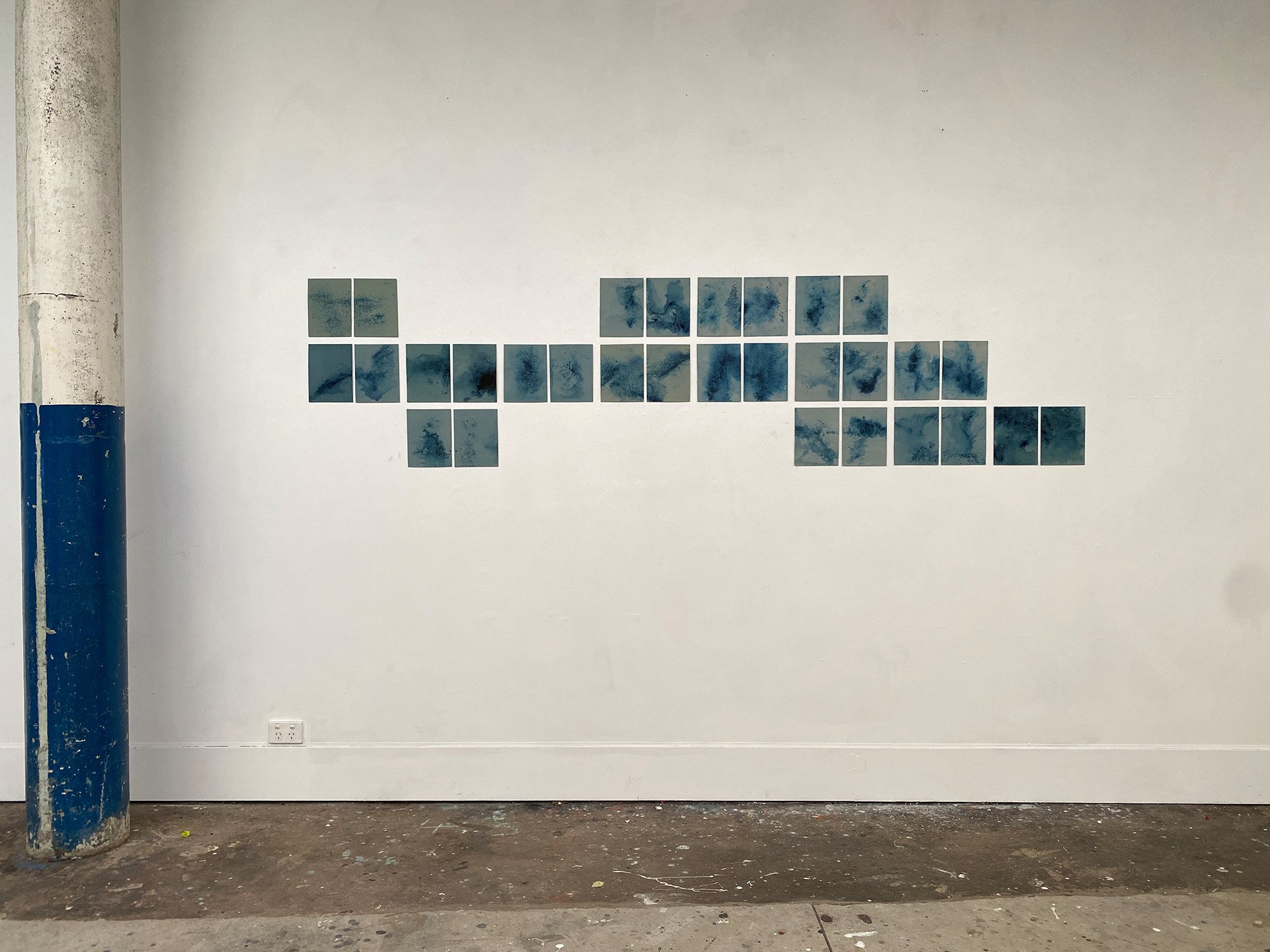
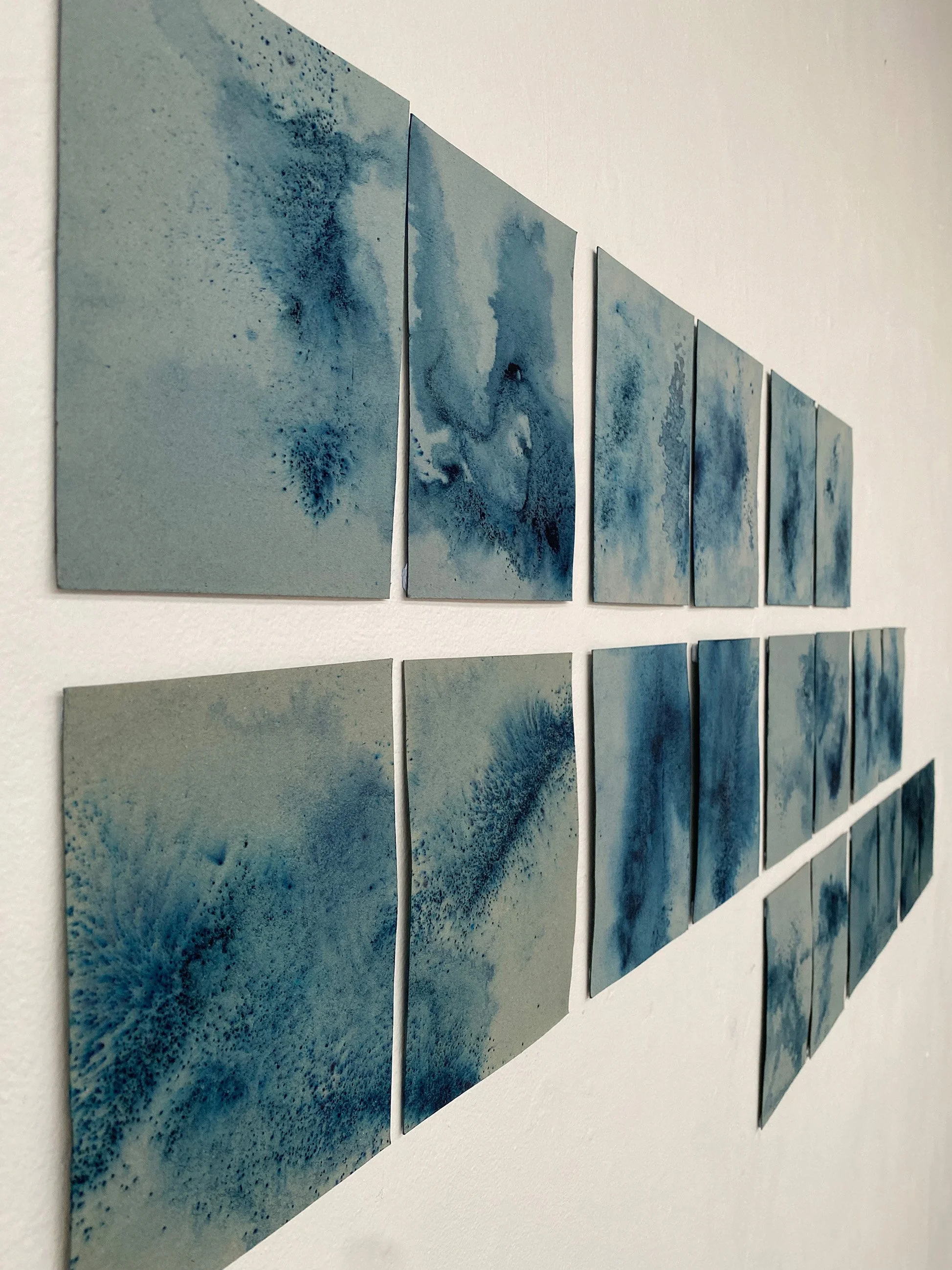
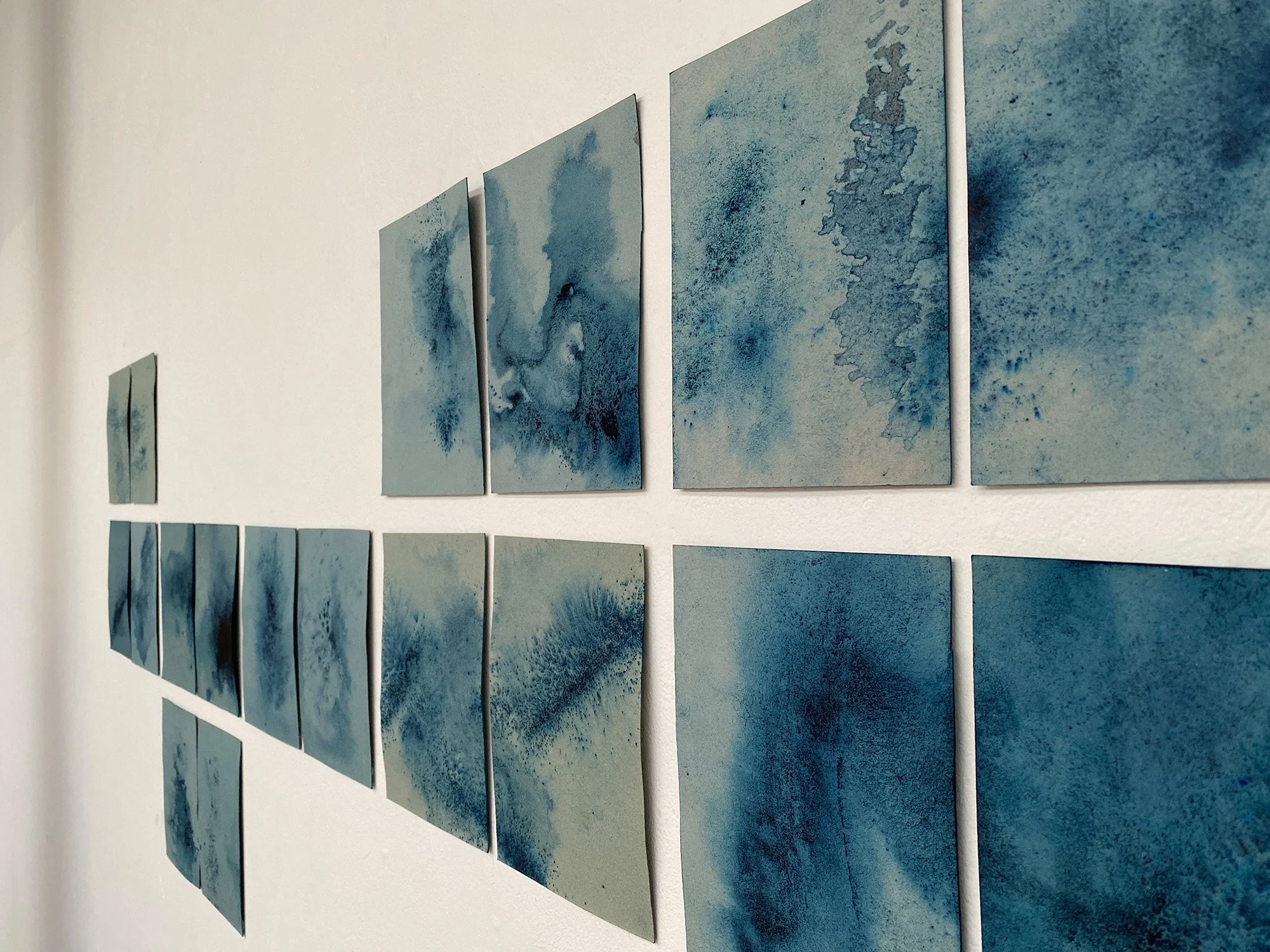
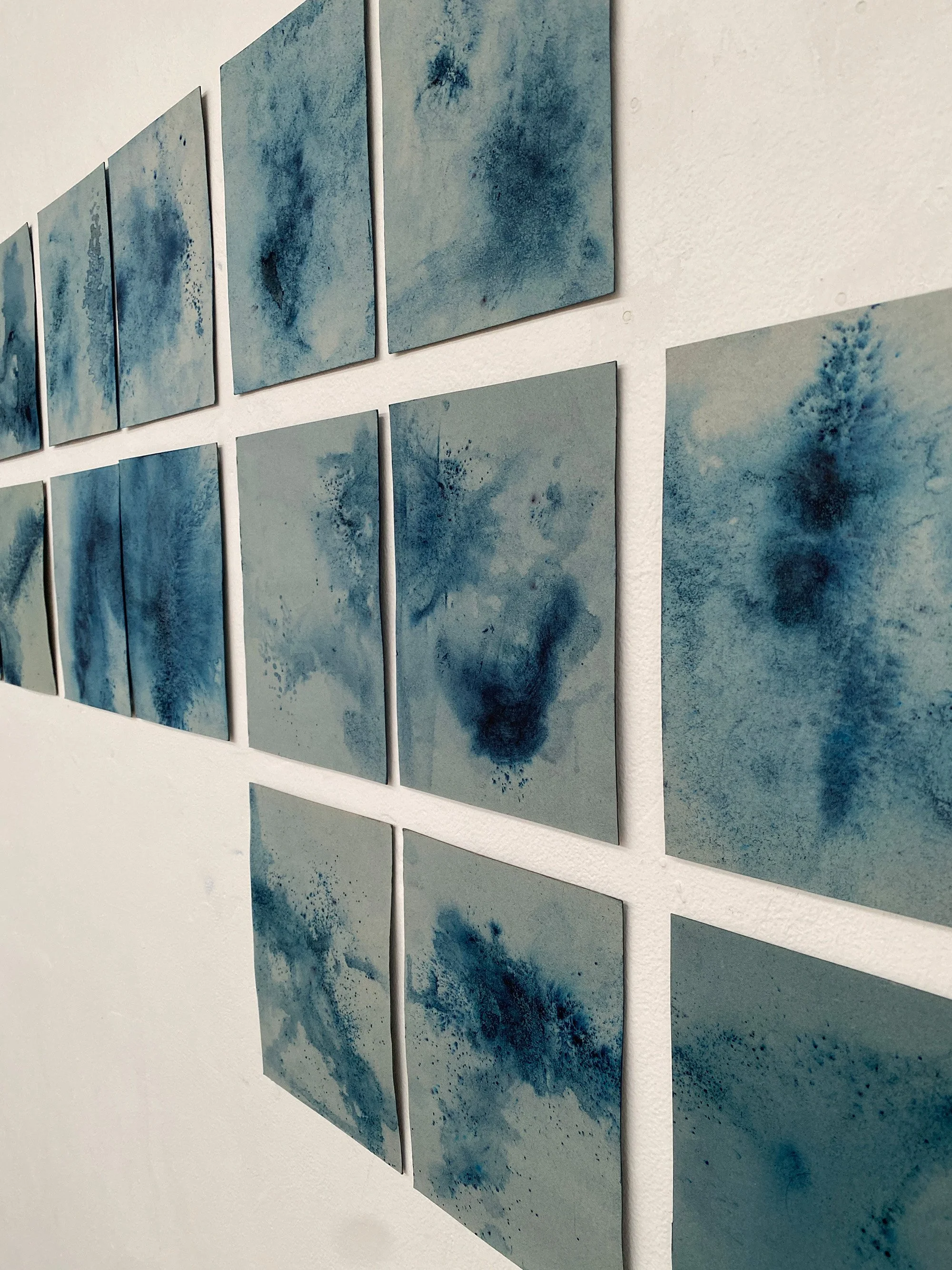
No time to die 2026
river water, dye, strawboard, datum line
20cm x 15cm, overall dimensions 100 cm x 370 cm
artwork statement
No time to die considers mortality and impermanence against the river’s continual movement, where change rather than permanence becomes the constant.
The work imagines the river as a datum, positioning it as the reference point. A collection of samples is shown across 30 panels, which, in scientific terms, is the upper limit for a small sample. The sets are arranged along a datum line and, while reading as environmental sampling, are based on observations of the river's undercurrents and hidden systems. The resulting datum is a collection of observations, moments, rhythms, sensations, apprehensions and experiences processed as imagined datasets.
Together, the panels suggest an attempt to measure something that is constantly shifting and impossible to fully capture. Made with dye rather than permanent pigment, the work is itself subject to change, slowly fading over time and becoming another record of transformation.