on the surface
On the surface is a series of works made from Superficial readings taken while observing the shifts in light and movement walking along the gugay balun / Tweed River during a time of treatment and recovery from breast cancer.
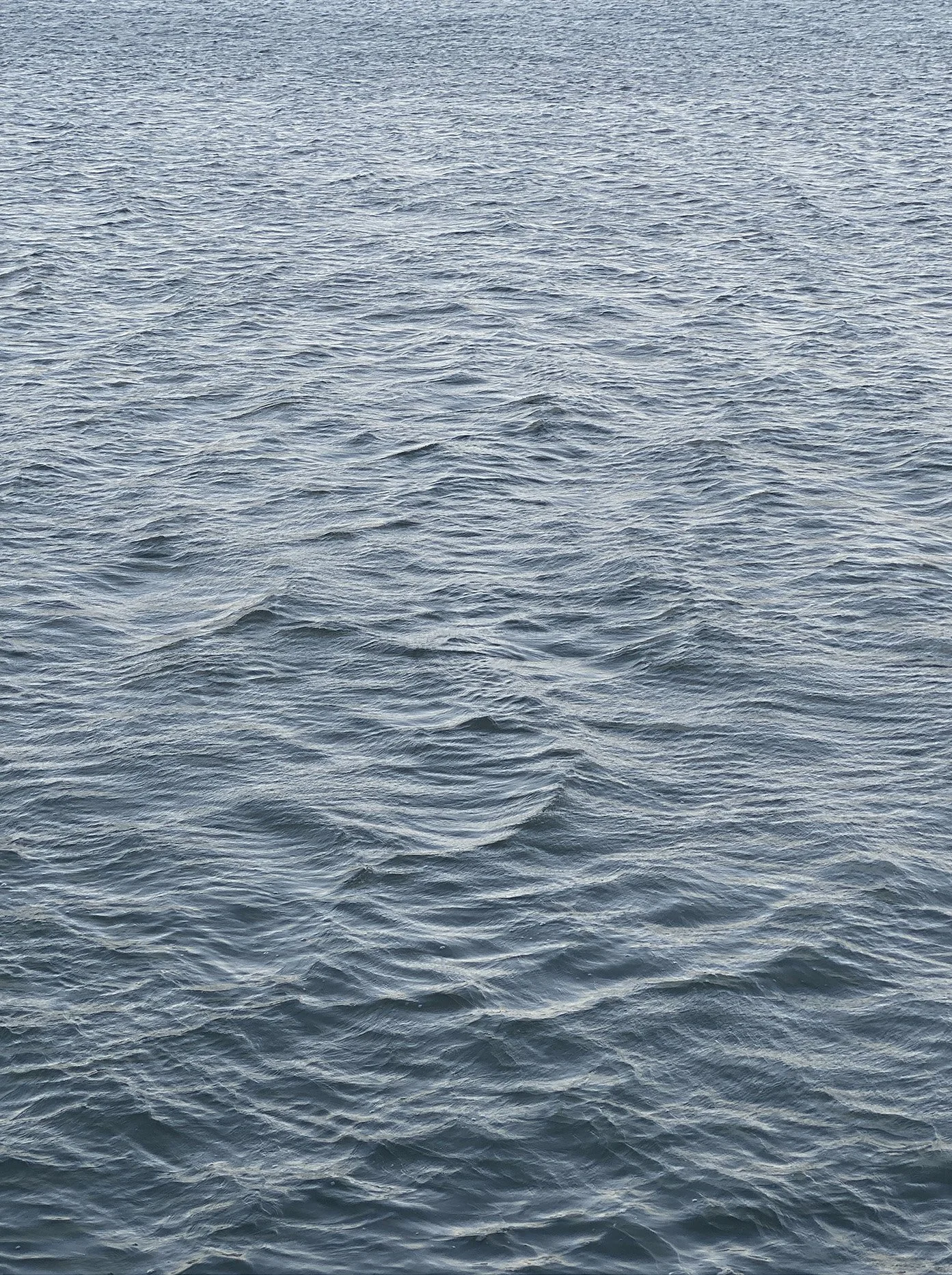
Somatic Sonar 2026
Digital images on acetate giclée prints unframed, 39 cm x 43.7 cm
Somatic sonar is first in the series and alludes to the visceral feeling of an adrenaline response experienced immediately following diagnosis.
Studio Notes examines how this work was set in motion.
artwork statement
On the surface emerges from a daily meditative practice observing and documenting the gugay balun / Tweed River.
After a breast cancer diagnosis in 2024, my usual walk along the river became highly tuned as the river appeared to become sentient in relation to my physical state. I became fascinated and mesmerised by the river's surface movement and how it seemed to mirror how I felt. There was a tension between calm and calamity. My time spent at the river was a welcome balm; it was a place to think and process. The act of daily photo documentation became not just observation and connection to nature, but a quiet practice of care.
During this period of upheaval, I took images in heartbeat bursts and catalogued them as datasets in Superficial readings, a record of the disquiet I was experiencing, which ultimately evolved into a physical and metaphysical enquiry.
On the surface delves deeper to explore the relationship between the ever-changing water surface and my body under clinical observation. The diagnostic workup for treatment included medical imaging and procedures: CT scans, ultrasounds, biopsies, MRIs, carbon tracking, sentinel node mapping, and surgery. The act of reading the river and reading the body connects the landscape and the body in a shared diagnostic exchange.
A body in treatment moves through rhythms similar to a river: currents and cycles, flows and fractions, highs and lows, sediment and waste removal, and the patterns and correlations that begin to surface. In layering river images, cellular structures are echoed, and duplicated wave formations mimic scan-like imagery, creating visual ambiguity in which the microscopic and the environmental blur into one another.
The use of acetate transparency speaks to the clarity of water and serves as a device in relation to the lymphatic system, acknowledging that the body itself is largely a water-based system. The contrasting layers, orientated and reorientated, produce optical interference and dendritic patterns, with the visual interplay drawing a parallel between the environment and medical imaging. In this convergence, the river and the body are understood as fluid, evolving systems and read as a new surface that reveals and obscures. It’s this state of limbo that mimics the waiting game played during clinical investigation, prompting ideas about what can be seen and what remains unseen.
The river landscape is presented in portrait, an orientation that reframes the subject as self-portraiture, shifting its reading from place to body and positioning the landscape as a reflection and image of a profound lived experience.